When an ecommerce operation underperforms, attention often turns immediately to the website.
The design may feel dated. Navigation might be difficult. Page speed may be slow, product discovery weak or checkout unnecessarily complicated. These issues matter, and a better platform can remove significant friction from the customer journey.
However, replacing the website does not automatically fix the operation behind it.
If stock data is unreliable, fulfilment is slow, responsibilities are unclear or product decisions are disconnected from customer demand, a new website simply presents the same problems through a more attractive interface.
Sustainable ecommerce growth requires more than a website project. It requires an operating model.
The platform is only the visible layer
The website is the part customers see, but ecommerce performance is shaped by everything that sits behind it.
Product must be selected, purchased, received, photographed, described, priced and made available. Inventory must remain accurate across every selling channel. Orders need to be processed, picked, packed and dispatched. Customer enquiries, exchanges and returns require clear ownership.
Marketing activity must align with stock availability, commercial priorities and operational capacity. Data should support decisions across buying, merchandising, customer acquisition and retention.
The platform connects many of these activities, but it cannot compensate indefinitely for weaknesses within them.
This is why an ecommerce rebuild should begin with the commercial and operational requirements of the business, rather than a list of design preferences.
Start with the operating model
Before selecting technology, an organisation should understand how its ecommerce operation needs to function.
Who owns trading performance? Who decides which products are promoted? Where is inventory held? How are online orders prioritised alongside store and wholesale demand? Who manages product information, content, customer service and fulfilment?
These questions can expose gaps that have little to do with the website itself.
In smaller organisations, several responsibilities may sit with one person. In larger operations, they may be divided across retail, marketing, finance, technology, warehouse and commercial teams.
Either structure can work, but ownership must be clear.
Without defined responsibilities, routine decisions become delayed. Products launch without complete information, campaigns promote unavailable stock and customer issues move between departments without resolution.
A stronger platform may make those problems more visible, but it will not solve them on its own.
Stock accuracy is part of the customer experience
Few things undermine ecommerce confidence faster than unreliable availability.
A customer expects that a product shown as available can actually be purchased and fulfilled. When inventory is inaccurate, orders may be delayed, partially fulfilled or cancelled after payment.
This is not simply a warehouse issue. It is a customer experience issue and, ultimately, a brand issue.
Sports retail can make inventory management particularly complex. Products may be sold through ecommerce, permanent stores, temporary matchday locations, events, wholesale accounts and third-party marketplaces. Demand can shift rapidly around fixtures, player announcements, launches and team performance.
The ecommerce platform, EPOS, ERP and inventory-management systems therefore need to support a reliable shared view of stock.
Technology integration is important, but so are the processes surrounding it. Goods must be received correctly, transfers recorded promptly, returns processed consistently and discrepancies investigated.
System accuracy depends on operational discipline.
Fulfilment shapes the proposition
The customer journey does not end at checkout.
Dispatch speed, packaging, tracking, communication, delivery reliability and the returns experience all influence whether a customer buys again.
The right fulfilment structure will vary between organisations. Some benefit from a central warehouse, while others may fulfil from a club store or use a hybrid model across several locations.
The objective should not be to impose one standard structure. It should be to choose the model that best supports the product range, order volume, customer promise and available resources.
That decision needs to be made early in an ecommerce programme because it affects system configuration, stock allocation, staffing, shipping rules, service levels and ongoing costs.
A polished website promising fast delivery will quickly lose credibility if the operation cannot consistently fulfil that promise.
Integration still requires ownership
Modern ecommerce platforms can connect with payment providers, EPOS, ERP, inventory, email marketing, customer service, analytics and fulfilment systems.
Those connections can reduce manual work and create better visibility, but integration alone does not guarantee an effective process.
Every important data flow should have an owner.
Someone needs to understand what information moves between systems, when it updates, what happens when an integration fails and how errors are identified and corrected.
This becomes particularly important in multi-brand or multi-club environments, where a shared technology architecture may support several distinct storefronts, product ranges and customer groups.
The architecture should create efficiency without removing the identity or commercial requirements of each organisation. A supporter should experience a storefront that feels relevant to their club, even when the underlying systems and operational resources are shared.
Build around how customers actually shop
Technology decisions should be informed by customer behaviour.
Supporters may browse on mobile during a fixture announcement, purchase immediately after a result or respond to a product launch promoted through social media. Others may research online before visiting a physical store.
The ecommerce and store experiences should therefore support one another.
Clear product information, accurate availability, appropriate payment options, relevant delivery choices and simple returns all reduce friction. Product structure and navigation should reflect how customers search, rather than how the organisation happens to categorise stock internally.
This requires collaboration between ecommerce, retail, product, marketing and operations. Customer experience is not owned by one department because every part of the operating model contributes to it.
Treat implementation as a trading transition
Launching a new ecommerce platform is not simply a technical migration. It is a controlled trading transition.
Product data, imagery, customer communications, payment processing, inventory, order management, redirects, analytics and operational responsibilities all need to be ready for the change.
The organisation must decide how existing orders, returns, customer accounts, gift cards and other liabilities will be handled. Teams need training, contingency plans and a clear understanding of what happens from the moment the new operation goes live.
The objective is to protect existing trade while creating the conditions required to improve it.
A technically successful launch can still become a commercial failure if customers cannot find products, teams cannot process orders or stock information is unreliable.
Measure the operation, not just the website
Website metrics such as traffic, conversion rate, average order value and abandonment remain essential. They should, however, sit alongside operational measures.
These might include:
- Product availability
- Order processing time
- Dispatch performance
- Cancellation rate
- Return reasons
- Stock accuracy
- Customer service response times
- Gross margin and promotional dependency
- Repeat purchase and customer retention
Together, these measures provide a more complete view of ecommerce performance.
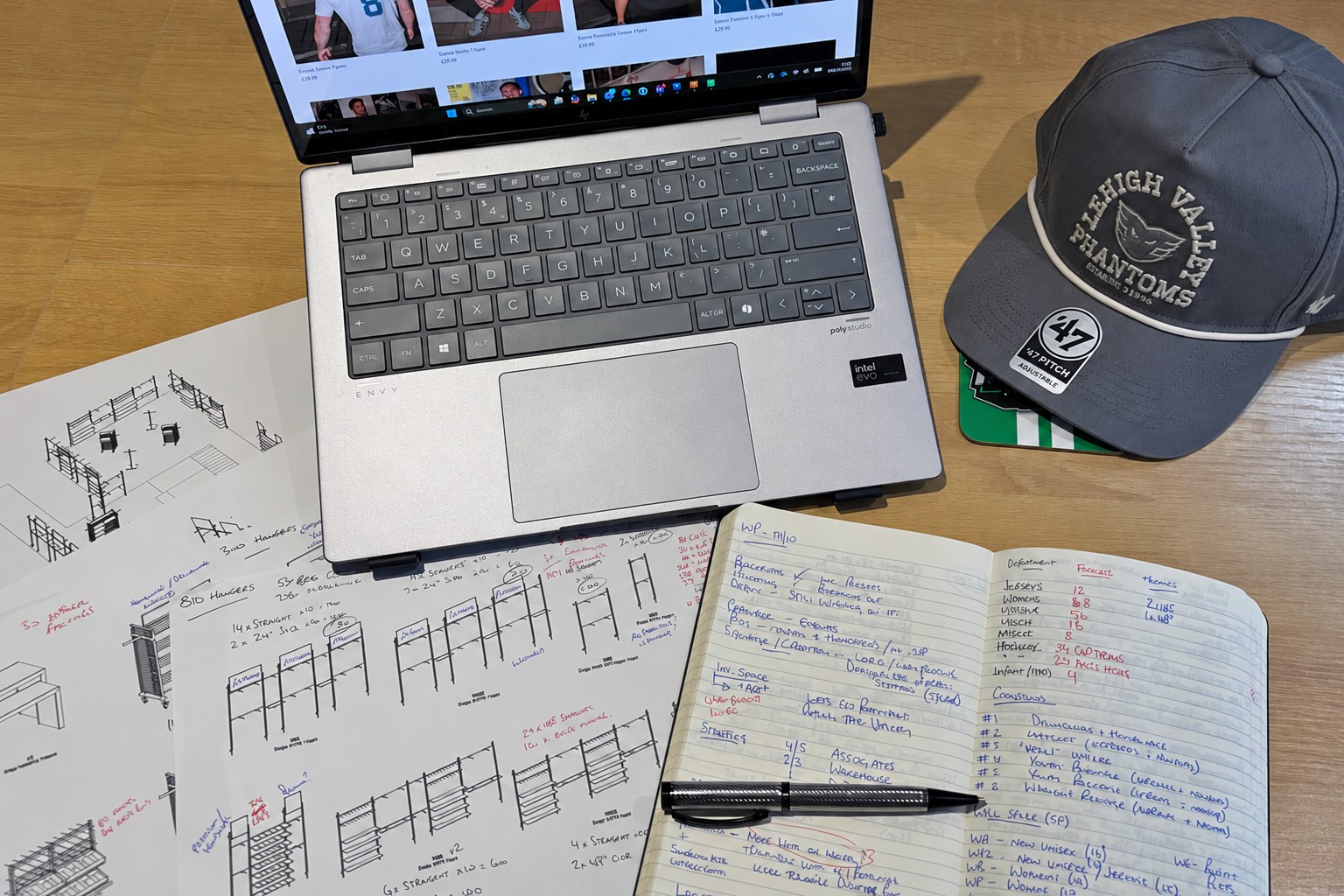
In one end-to-end retail transformation for the Lehigh Valley Phantoms, the work extended across Shopify ecommerce, product range, pricing, inventory control, fulfilment, customer service and physical retail operations. The resulting digital revenue uplift reached 429% against the comparable prior-year month.
That outcome was not produced by changing the website alone. It came from improving the connected operation around it.
A website project has an end date. An ecommerce operating model does not.
The strongest organisations continue to review performance, improve processes, develop their range and respond to changing customer behaviour after launch.
The platform matters. It should be fast, flexible and appropriate for the organisation’s needs.
However, lasting growth comes from aligning technology with product, stock, fulfilment, people, data and commercial ownership.
That is the difference between launching a new website and building a stronger ecommerce business.