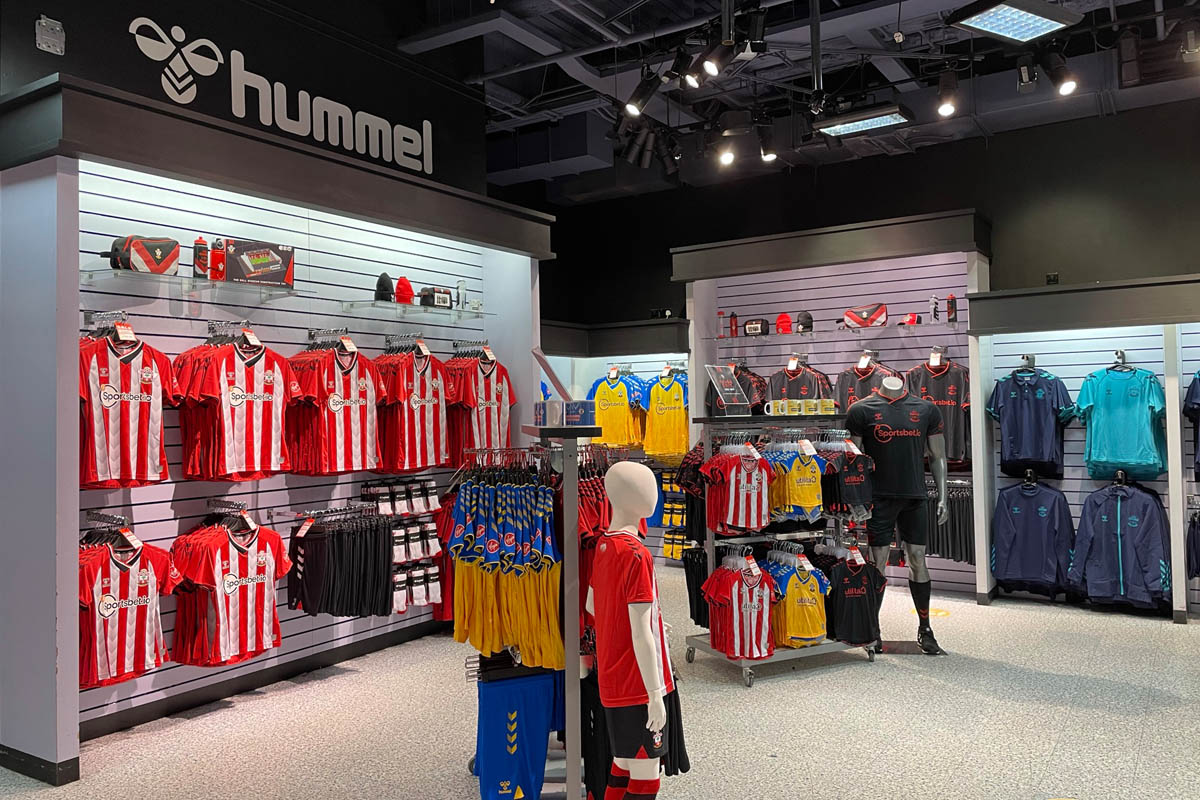
“Sold out” is one of the most satisfying messages a retailer can display.
It suggests demand, desirability and commercial success. In sport, it can also create a sense that a product launch has captured the imagination of supporters.
Sometimes that interpretation is entirely justified. Sometimes, however, selling out simply means that insufficient stock was purchased.
If 500 units were sold but another 300 customers wanted to buy one, the result is not just 500 successful sales. It is also 300 potential sales that were never completed.
Those lost sales rarely appear in standard reports. They do not feature in the profit and loss account, because the revenue was never generated. The sales report simply shows that every available unit was sold.
The more important question is therefore not whether the product sold out. It is how many more units could have been sold.
When is selling out genuinely successful?
There are situations where scarcity is deliberate.
A limited-edition product or capsule collection may be designed to sell through quickly. The restricted quantity is part of the proposition, helping to create urgency, exclusivity and anticipation around future releases.
In that model, selling out within a defined period can be an intentional and successful outcome. The quantity has been selected to balance commercial return with the value created by scarcity.
This is very different from a core product becoming unavailable because demand was underestimated.
Replica shirts, training wear and evergreen branded products are expected to remain available for meaningful parts of the season. Selling out of popular sizes shortly after launch may generate an eye-catching announcement, but it can also leave supporters frustrated and revenue unrealised.
A stockout should therefore be interpreted in context. Was scarcity part of the strategy, or was availability lost because the forecast, buying decision or replenishment plan was inadequate?
What sales reports do not show
Most retail reporting is built around completed transactions. It tells us what sold, when it sold and how much revenue it generated.
It is much harder to measure the customer who visited the website, discovered their size was unavailable and left without purchasing. The same applies to the supporter who walked into a club store, could not find the product they wanted and decided not to buy an alternative.
This missing demand can materially distort performance analysis.
A product selling 500 units from an opening quantity of 500 appears to have achieved a 100% sell-through rate. That sounds excellent. However, if the product sold out in two days and remained unavailable for several weeks, the result could indicate a significant forecasting failure.
By contrast, selling 450 units from 500 over the intended trading period may generate more revenue overall if the product remained available when customers wanted it.
Sell-through remains an important measure, but it should never be considered without timing, availability and demand.
Forecasting is not about predicting the future perfectly
No retail forecast will be completely accurate. Sport introduces too many variables for that.
Team performance, promotion, relegation, player signings, product design, launch timing, supporter sentiment and unexpected media attention can all affect demand. Weather, match schedules and the wider economic environment can influence purchasing behaviour too.
The objective is not perfect prediction. It is informed decision-making.
A credible forecast should consider:
- Historic sales performance
- The rate at which comparable products sold
- Size and product variation demand
- Changes in design, pricing or brand partner
- Club circumstances and supporter sentiment
- Planned marketing and launch activity
- Supplier lead times and reorder opportunities
- The commercial cost of surplus stock against the risk of missed sales
Recent performance alone is not always enough. In one industry discussion, a club retailer explained how replica buying had been approached conservatively following relegation. Actual demand then exceeded expectations.
That example demonstrates why forecasts need judgement as well as data. Previous sales provide an important starting point, but circumstances can change how supporters respond.
Replenishment matters as much as the initial order
The opening buy is only one part of the availability plan.
Retailers should understand how quickly additional stock can be produced, transported and made available. A deliberately cautious initial order can work when suppliers offer reliable and commercially viable replenishment.
It becomes much riskier when reorder lead times extend across several weeks or when minimum quantities make repeat orders impractical.
Before launch, teams should know which products can be replenished, the likely lead time, the minimum order quantity and the final date at which further stock remains commercially sensible.
That information allows buying decisions to reflect the full trading opportunity, rather than treating the opening order as a single irreversible commitment.
Measuring the demand you could not fulfil
Lost sales will never be perfectly visible, but they can be estimated more effectively.
Retail teams should monitor when products and key sizes become unavailable, the sales rate immediately before the stockout, customer service enquiries, back-in-stock requests, unsuccessful website searches and demand across alternative channels.
Store teams can also provide valuable qualitative insight. If the same unavailable product is requested repeatedly, that information should be recorded and fed into future buying decisions.
The purpose is not to create an exact theoretical sales figure. It is to identify patterns, improve future forecasts and understand where availability is restricting growth.
A better definition of success
Selling every unit purchased may protect margin and reduce the risk of clearance stock. Those are important commercial outcomes.
However, avoiding all surplus stock should not become the sole objective. Buying too cautiously can be just as damaging as buying too deeply, particularly when the result is missed revenue, disappointed supporters and lost momentum around a successful product.
The strongest retail operations balance both risks. They use data, judgement and supplier relationships to manage stock responsibly while remaining capable of meeting genuine demand.
“Sold out” may still be worth celebrating. It should also prompt a more useful commercial question:
How many more could we have sold?